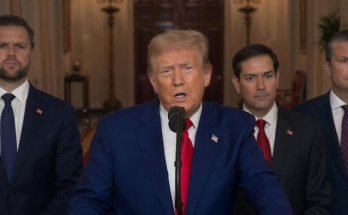
WASHINGTON, D.C. — President Donald J. Trump launched an extraordinary federal intervention in Washington, D.C., declaring a crime emergency and taking unprecedented steps to place the city’s police force under federal control while deploying National Guard personnel.
The action centered on Executive Order 14333 and Section 740 of the District of Columbia Home Rule Act, a provision that allows the federal government to assume control of the Metropolitan Police Department under certain emergency circumstances. The administration argued that serious crime and public safety concerns justified the intervention.
Trump portrayed the operation as a dramatic effort to restore order in the nation’s capital. Federal law enforcement agencies and National Guard troops increased their presence throughout Washington, including around major transportation hubs, government buildings and other high-profile locations.
The intervention immediately triggered a fierce political and legal debate. Supporters said Washington’s leadership had failed to adequately address crime, homelessness and disorder, arguing that stronger federal action was necessary. Critics, however, warned that the unprecedented federal involvement threatened local autonomy and raised serious constitutional and civil-liberties concerns.
The operation involved hundreds of federal personnel from agencies including the FBI, DEA, ATF, U.S. Marshals Service and National Park Service, alongside National Guard troops. Authorities focused on areas experiencing persistent public-safety problems and increased enforcement efforts against violent offenders.
The federal presence also intensified attention on homeless encampments and public spaces. Officials moved to clear certain camps and address conditions around federal property, while law-enforcement operations targeted individuals suspected of criminal activity.
Supporters of Trump’s strategy argued that the aggressive approach could make Washington safer and restore public confidence. They pointed to concerns over carjackings, robberies, assaults and other violent crimes that had fueled frustration among residents, workers and visitors.
Conservative lawmakers strongly backed the intervention. Rep. Andy Barr, for example, praised Trump’s plan and said the president could “clean up DC,” comparing the effort with his administration’s approach to border security. Barr described the capital as suffering from crime, corruption and homelessness.
The response from Washington’s Democratic leadership was sharply different. Local officials and civil-rights advocates questioned the scale and legality of the federal operation, while warning that an expanded military and federal law-enforcement presence could create fear among residents.
Immigrant communities and advocacy organizations also expressed concern that the increased presence of federal authorities could lead to immigration enforcement, even when officers were primarily conducting public-safety operations.
The intervention has therefore become more than a debate about policing. It represents a major confrontation over the balance between federal authority and Washington’s limited form of local self-government.
For Trump and his supporters, the operation symbolizes a decisive effort to reclaim public spaces and restore security in the capital. For opponents, it represents an alarming expansion of presidential power.
As the federal presence continues, Washington remains at the center of a national debate over crime, policing, homelessness, constitutional authority and the future of local control in the nation’s capital.