Trump Delivers Stark Warning to Iran as U.S. Military Pressure Intensifies
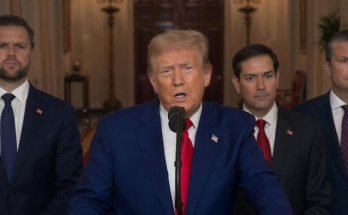
WASHINGTON, D.C. — President Donald J. Trump has issued a stark warning to Iran, declaring that any successful attempt to assassinate a sitting or former American president would trigger an overwhelming U.S. response.
Speaking to reporters aboard Air Force One, Trump described his position toward Tehran in unusually blunt terms, emphasizing that Iran should have no doubt about the consequences of targeting American leaders.
The president also pointed to what he described as firm instructions to the U.S. military regarding how Washington would respond if Iran carried out an assassination threat. His comments come amid years of Iranian threats against American officials following the 2020 U.S. strike that killed Qassem Soleimani, a senior Iranian military commander.
A Legacy of Tensions
The confrontation between Washington and Tehran has deep roots. Soleimani was killed in a U.S. drone strike near Baghdad in January 2020, dramatically escalating tensions between the two countries.
Since then, U.S. officials have repeatedly warned about Iranian efforts to retaliate against American personnel and former government officials. Trump has argued that such threats require a strong response rather than prolonged diplomatic hesitation.
During his remarks, Trump also criticized former President Joe Biden, saying the previous administration should have responded more forcefully to threats against American leaders.
For Trump, preventing attacks on U.S. officials is not simply a matter of individual security. He has framed the issue as one of national sovereignty and deterrence, warning that Iran would face devastating consequences if it crossed what he considers a clear red line.
U.S. Military Pressure
Trump also discussed the broader American strategy toward Iran, including U.S. military operations against Iranian nuclear infrastructure.
According to Trump, American B-2 Spirit stealth bombers were used in June to strike three Iranian nuclear facilities. He characterized the operation as a deliberate demonstration of American military capability and argued that Iran could have avoided the strikes by reaching an agreement through negotiations.
“We could have had a deal instead of sending the B-2s to knock out their nuclear potential,” Trump said.
The president presented the strikes as part of a broader strategy combining military pressure with diplomacy. His administration has continued to push Tehran toward an agreement that would impose significant restrictions on Iran’s nuclear ambitions.
At the same time, American naval forces have increased their presence in the region. Trump described the buildup as an “armada,” with the USS Abraham Lincoln carrier strike group operating alongside other U.S. warships in waters near the strategically important Strait of Hormuz.
Reports of preparations for an additional carrier strike group have further fueled speculation about Washington’s military options if negotiations fail.
Trump has repeatedly emphasized that his preferred outcome remains a negotiated settlement, but he has also warned that the United States is prepared to take stronger action.
“Either we will make a deal, or we will have to do something very tough like last time,” Trump said.
Netanyahu Heads to Washington
The pressure campaign is unfolding alongside renewed coordination between Washington and Jerusalem.
Israeli Prime Minister Benjamin Netanyahu is expected to meet with Trump in Washington to discuss Iran and the future of nuclear negotiations. Netanyahu has indicated that he intends to present what he considers essential principles for any potential agreement.
The discussions are expected to address issues extending beyond Iran’s nuclear program, including its ballistic-missile capabilities and support for regional militant organizations.
Trump and Netanyahu have both argued that any new agreement must address the broader security threat posed by Iran rather than simply repeat the framework of the 2015 nuclear deal.
Netanyahu has said he intends to discuss the principles that Israel believes should guide negotiations.
A High-Stakes Moment
The confrontation with Iran now stands at a critical juncture, with diplomacy and military pressure developing simultaneously.
Trump continues to portray his strategy as one designed to secure peace through overwhelming strength. At the same time, his administration is signaling that Washington is prepared to escalate if Tehran refuses to accept the terms being demanded.
The result is an increasingly tense standoff in which the possibility of diplomacy remains open, but the military alternative is becoming increasingly prominent.
For Iran’s leadership, the calculation is clear: reach an agreement that satisfies Washington and its allies, or risk facing further American pressure.
Trump has made his preference for a deal clear. But he has also sought to ensure that Tehran understands the consequences should negotiations fail.