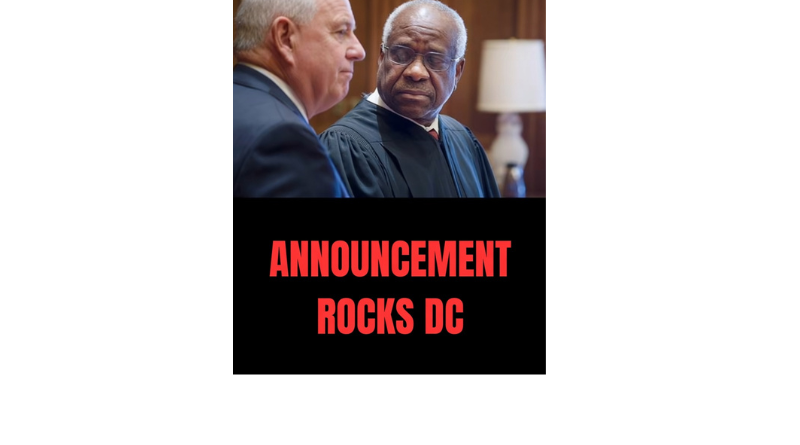
Justice Clarence Thomas sharply criticized the U.S. Supreme Court after the justices declined to hear Florida’s lawsuit against California and Washington over the issuance of commercial driver’s licenses (CDLs) to undocumented immigrants.
Florida argued that California and Washington were undermining public safety by allowing individuals without legal immigration status—and, in some cases, without sufficient English-language proficiency—to obtain commercial trucking licenses despite federal standards governing interstate transportation.
The lawsuit drew national attention following a deadly 2025 crash on the Florida Turnpike involving an undocumented truck driver who was reportedly licensed in either California or Washington. According to court filings, the driver allegedly made an illegal U-turn and was unable to properly read roadway signs, leading to a collision that killed three people.
Joined by Justice Samuel Alito, Thomas argued that the Supreme Court had a constitutional obligation to hear the case because disputes between states fall under the Court’s exclusive original jurisdiction, leaving Florida with no other judicial forum to pursue its claims. The Court’s majority denied Florida’s request without providing an explanation.
In his dissent, Thomas warned that failures to enforce federal commercial licensing requirements could endanger motorists nationwide. Referring to truck driver Harjinder Singh, Thomas wrote that the driver “could not read the road signs” and argued that Florida deserved the opportunity to present its case.
“An illegal alien who cannot read English road signs cannot drive an 80,000-pound tractor-trailer,” Thomas wrote. He added that federal law requires CDL applicants to pass driving tests, demonstrate adequate English-language skills, and satisfy applicable immigration-related eligibility requirements.
Thomas also argued that while the Supreme Court has broad discretion in deciding whether to hear most appeals, interstate disputes are different because the Constitution grants the Court exclusive authority over such cases. He criticized the majority for adopting what he described as a discretionary approach that conflicts with Congress’s statutory framework.
“If this Court does not exercise jurisdiction over a controversy between two States, then the complaining State has no judicial forum in which to seek relief,” Thomas wrote.
He further suggested that if Florida, California, and Washington were separate nations, a dispute over one government’s licensing practices affecting another country’s public safety could become a significant international matter. According to Thomas, the Constitution intended for the Supreme Court to resolve such conflicts between states.
The issue of commercial driver’s licenses issued to non-citizens has received increased federal attention following several fatal crashes involving undocumented immigrant truck drivers. In September, Transportation Secretary Sean Duffy announced stricter federal standards for non-citizens seeking CDLs as part of the Trump administration’s broader transportation and immigration enforcement efforts.
Duffy also warned that California could face the loss of federal transportation funding if it continued allowing commercial licenses to remain active for individuals who no longer met revised federal eligibility requirements.